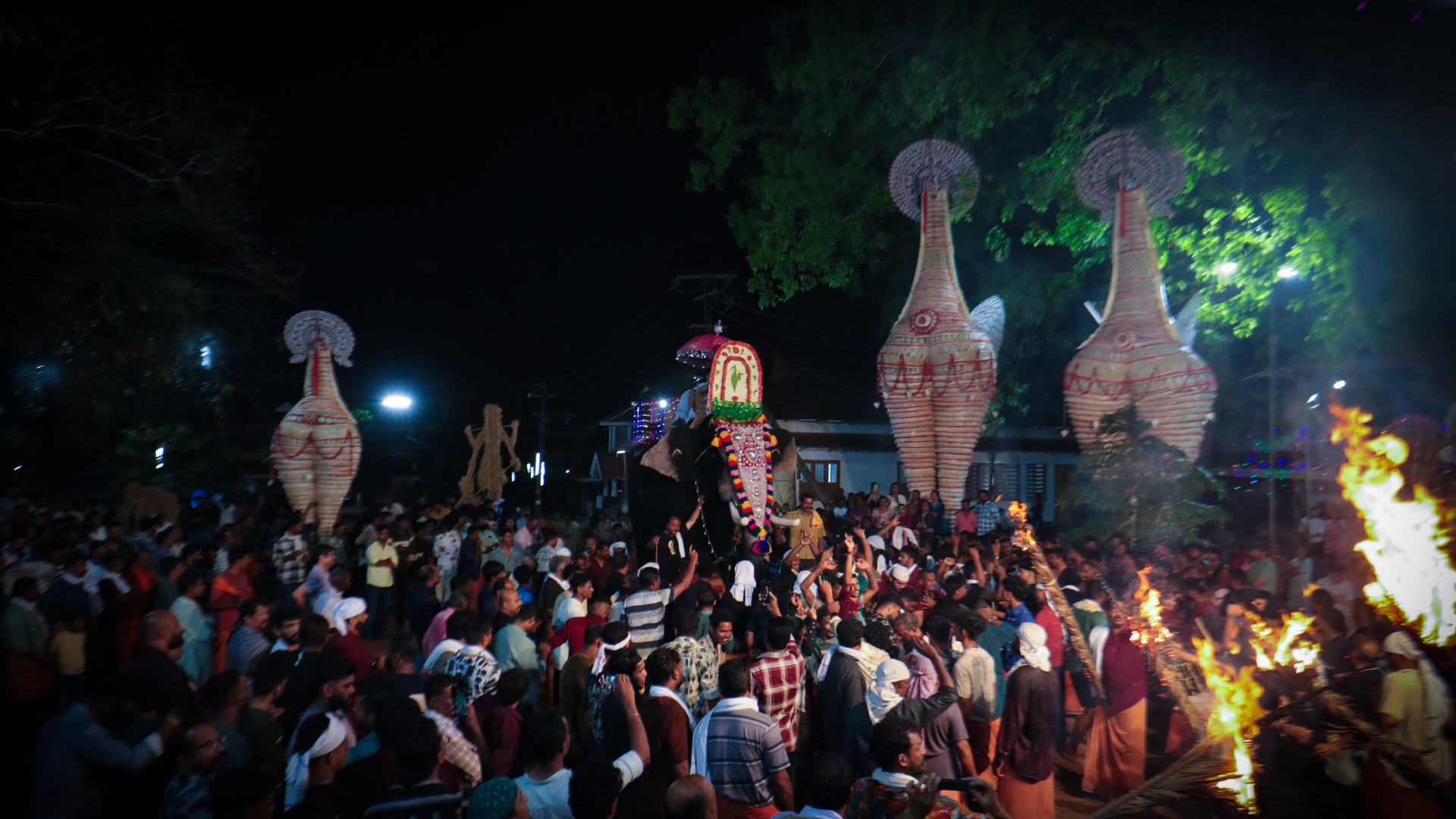




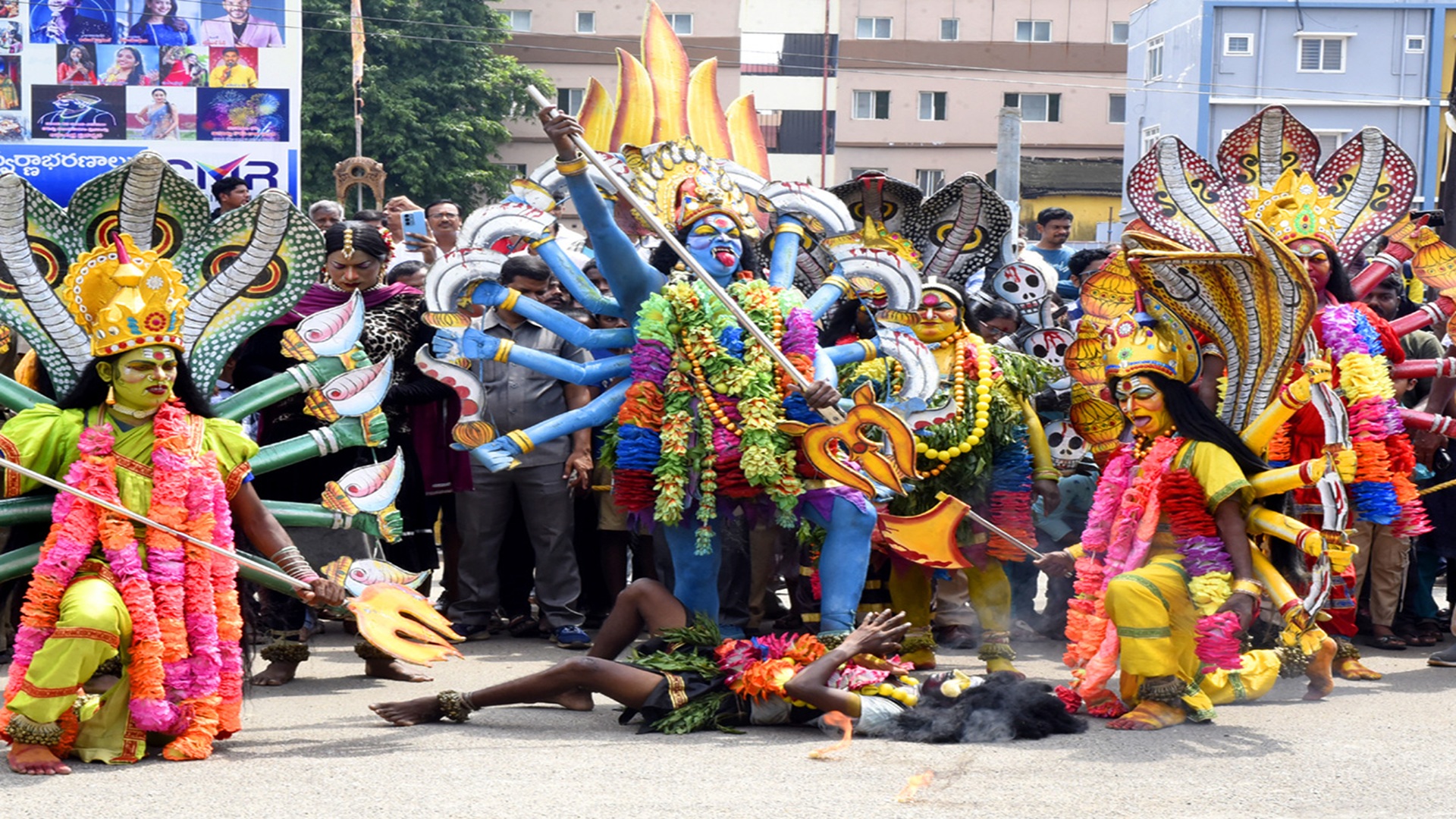
A defining feature of the Neelamperoor Padayani Festival is the grand procession of intricately crafted effigies offered to the presiding goddess. These include majestic swans, elephants, and legendary characters such as Bhima, Ravana, and Yakshi. Decorated with remarkable artistry and attention to detail, these creations reflect the rich craftsmanship and cultural traditions of Kerala.
The festival celebrations commence shortly after the Thiruvonam star and continue until the Pooram star, a day considered especially significant as it is associated with the divine birth anniversary of the temple goddess. The rituals begin with a ceremonial procession seeking the symbolic blessings of Cheraman Perumal, whose memorial stands on the western side of the temple. Devotees participate by carrying flaming coconut-leaf torches in a traditional observance that continues for four days.
The next phase of the festivities features Kudapadayani, where beautifully designed umbrella-shaped decorations are crafted using coconut leaf stalks and adorned with flowers. This is followed by another series of ritual offerings made from fresh jackfruit leaves, highlighting the close connection between the festival and nature.
The final days of the celebration are marked by the arrival of the famous swan effigies, known as Annam. Constructed from plantain stems, tender coconut leaves, and vibrant floral decorations, these impressive structures are among the most anticipated attractions of the festival. The towering ceremonial swan, rising to nearly 45 feet in height, serves as the centerpiece of the concluding day's rituals and is offered to the deity with great devotion.
Another captivating element of the festival is Thothakali, a traditional dance performance presented before a sacred fire. Accompanied by rhythmic percussion and folk music, the performance adds energy and excitement to the celebrations while preserving age-old artistic traditions.
Neelamperoor Padayani is not merely a religious festival; it is a vibrant expression of Kerala's cultural heritage. Through its rituals, artistic displays, music, and community participation, the festival continues to strengthen social bonds while keeping centuries-old traditions alive for future generations.




-/datia)
536x302.jpg.jpeg)




![aanayuttu [536×302px] - 1](/content/dam/incredible-india/images/utsav-festivals-and-events/utsav-events/kerala/aanayoottu-at-vadakkumnathan-temple/aanayuttu)


Right536x302.jpg.jpeg)











/World)



/HeritageWalk1Right536.jpg.jpeg)



.png)




.jpg.jpeg)
.jpg.jpeg)




-regional-fes-explore?qlt=82&ts=1742183405750)

















-/Jpg)