

Hero-Banner
Hero-Banner

Video Description

map


Major States

Maharashtra

Major States

Maharashtra

Nagpanchami

Nagpanchami is an important festival in Maharashtra. The fifth day of the bright fortnight (Shukla Paksha) in the Hindu lunar month of Shravana (July–August) is celebrated as Nagpanchami. Worship of Snake is an important ritual in Maharashtra, and on this festival, cobras made of clay are venerated in homes. It is mainly celebrated for two reasons. Firstly, the abode of the nags (snakes) forms the bottom of the patal lok & the blessings of the nags are sought for the well-being of the family. Secondly, the nags (snakes) keep the crops safe from rats and rodents, and so the farmers pray to the nag-devta and offer their gratefulness. People make offerings of sweets and milk to the snake deity. People throng nag temples and also Shiva temples, since the nag is very closely associated with Lord Shiva.


Nagpanchami: Worship of the Serpent Deity in Maharashtra

Origin of Nagpanchami:

Nagpanchami, a traditional Hindu festival, is celebrated to honour Nagas (serpents) as divine entities. The festival, observed on the fifth day of the bright fortnight of the lunar month of Shravana (July-August), has its roots in ancient Hindu mythology and agrarian practices. Serpent worship is believed to have originated from the reverence for nature and its elements, with snakes being regarded as protectors of crops and symbols of fertility.

Nagpanchami is deeply connected to Hindu scriptures, including the Mahabharata and Puranas. According to the legends, the snake deities are associated with Lord Shiva, who is often depicted with a cobra around his neck, symbolizing his mastery over death and the eternal cycle of life. Another popular story revolves around Lord Krishna, who subdued the serpent Kaliya in the Yamuna River, signifying the victory of good over evil.

The worship of snakes is also tied to the belief that they are guardians of treasures and water bodies. In Maharashtra, Nagpanchami holds special cultural and spiritual significance, blending mythology, folklore, and ecological awareness.


Why Nagpanchami is Celebrated:

1) Divine Leela of Lord Shree Krishna

In the river Yamuna flowing through Vrindavan, the serpent Kaliya began harassing the local people severely. Seeing this, Lord Krishna decided to teach him a lesson. One day, while playing ball with his friends on the banks of the Yamuna, their ball fell into the river. Lord Krishna then headed toward the Yamuna to retrieve it. His companions tried hard to stop Him, but Lord Krishna did not listen to them. He jumped into the river from the branch of a Kadamba tree.

As soon as Kaliya realized that Lord Krishna had entered the water, he told Him to leave immediately and threatened to kill Him. However, Lord Krishna challenged him to a fight. Enraged, Kaliya attacked Lord Krishna. A fierce battle ensued between the Lord and Kaliya for a long time. Eventually, exhausted, Kaliya surrendered to Lord Krishna. During this divine pastime (leela), Lord Krishna did not launch a single attack on Kaliya; He merely dodged his blows and danced upon his hood.

In the end, Kaliya begged for forgiveness. Lord Krishna stopped His dance and commanded Kaliya to leave the river and go away. This event took place on the day of Shravana Shukla Panchami. To commemorate this event, the festival of Naga Panchami has been celebrated ever since.

2) Expressing Gratitude to Nature

Nagpanchami is celebrated to seek blessings from serpent deities for prosperity, protection, and fertility. It is a day of expressing gratitude to snakes, which play a crucial role in maintaining ecological balance by controlling pest populations. The festival is also believed to protect devotees from snake bites and misfortunes. In rural Maharashtra, where agriculture is a primary livelihood, Nagpanchami is particularly significant, as snakes are considered protectors of the fields. The festival is marked by rituals that emphasise harmony with nature and respect for all living beings.

How Nagpanchami is celebrated:

Nagpanchami is celebrated with great fervour across Maharashtra, with rituals and customs varying slightly between regions. The festival involves a combination of worship, folk traditions, and community gatherings.

1. Worship of Snake Deities:

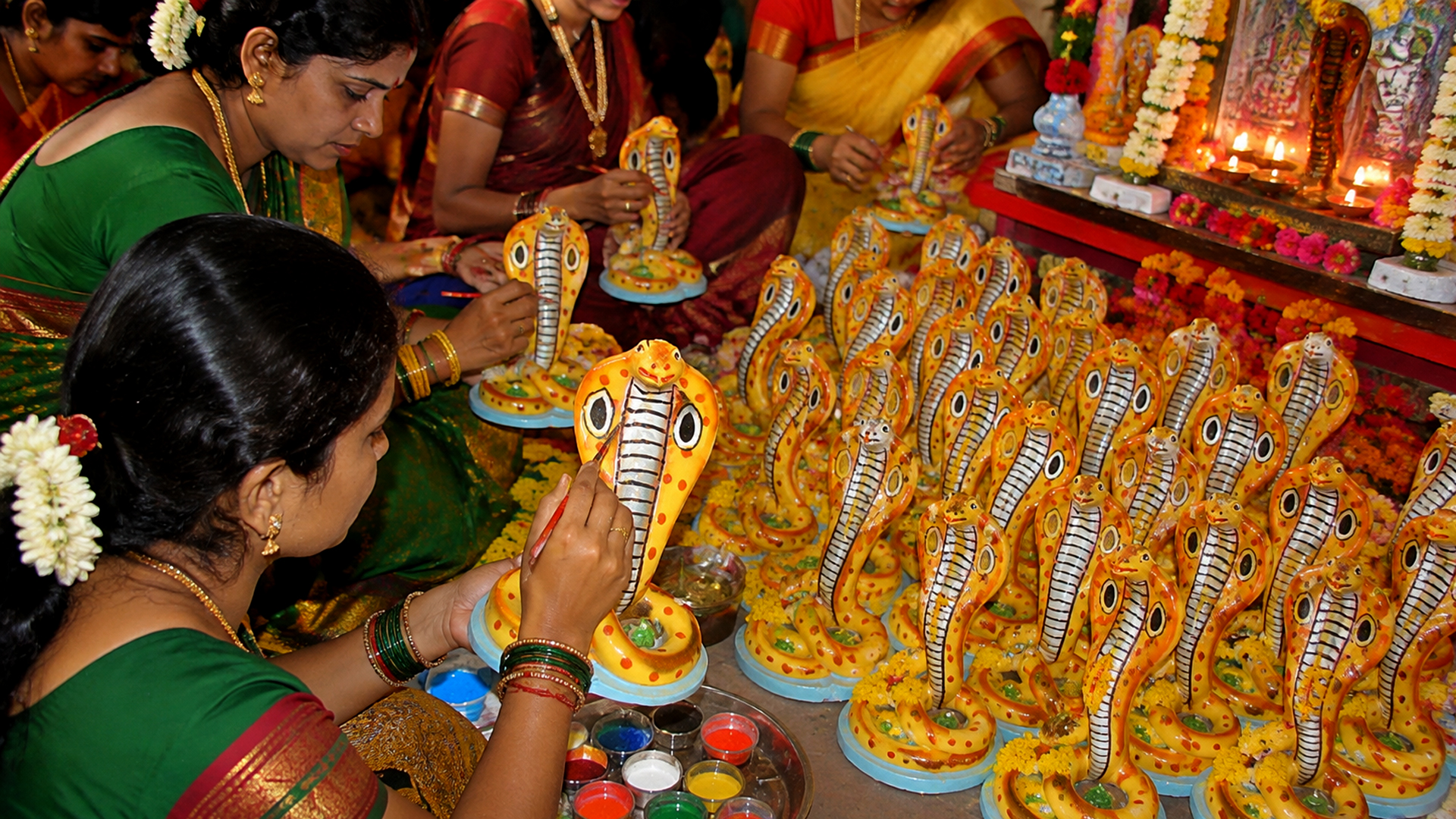
On Nagpanchami, devotees worship images or idols of snakes, often made of clay, silver, or wood. In rural areas, live snakes, especially cobras, are worshipped. Snake charmers bring snakes to villages and towns, and devotees offer milk, flowers, turmeric, and rice to the serpents. Special prayers and mantras are recited to invoke the blessings of the serpent deities.

2. Snake Mounds:

In rural areas, anthills (believed to be the dwelling places of snakes) are decorated with flowers and turmeric paste. Women pour milk and honey into the anthills as offerings, seeking protection and prosperity for their families.

3. Fasting and Pujas:

Many devotees observe fasts on Nagpanchami and perform special pujas at home or temples. Women, in particular, participate in these rituals, praying for the well-being of their families and protection from snake-related dangers.

4. Folk Songs and Dances:

Traditional songs and dances dedicated to the serpent deities are performed in villages and towns. These cultural expressions often narrate stories from Hindu mythology, emphasizing the significance of Nagas in Indian culture.

5. No Digging of Soil:

A unique aspect of Nagpanchami is the prohibition of digging soil on this day, as it is believed to disturb the snakes dwelling underground. This practice highlights the ecological aspect of the festival and promotes the idea of living in harmony with nature.

6. Processions and Fairs:

In some regions of Maharashtra, Nagpanchami is celebrated with grand processions featuring snake idols and vibrant decorations. Local fairs and markets are set up, adding to the festive atmosphere.

7. Special Foods:

Nagpanchami is also a culinary celebration. Traditional dishes like Puran Poli, Kheer, and Chakli are prepared and shared among family and friends. These dishes are often offered as Naivedya (sacred food offering) during the puja.


8. Nagoba Temples:

Devotees visit temples dedicated to serpent deities, such as the Nagoba Temple in regions like Vidarbha. These temples hold special ceremonies and attract a large number of devotees during Nagpanchami.


Significance in Maharashtra’s Cultural Landscape:

Nagpanchami is a festival that blends spirituality, ecology, and folklore, making it a vital part of Maharashtra’s cultural heritage. The festival reflects the region’s deep connection with nature and its reverence for all living beings. It also underscores the importance of snakes in maintaining ecological balance and serves as a reminder of the need for coexistence with wildlife.

For Maharashtra Tourism, Nagpanchami offers a unique opportunity to showcase the state’s cultural diversity and traditional practices. Visitors can witness the vibrant rituals, folk performances, and culinary delights associated with the festival, gaining a deeper understanding of Maharashtra’s rich cultural tapestry.

Nagpanchami is more than just a religious festival; it is a celebration of life, nature, and harmony. The rituals and customs associated with the festival highlight the spiritual and ecological values of Indian culture. For visitors to Maharashtra, Nagpanchami provides a chance to immerse themselves in the region’s traditions and experience the warmth and hospitality of its people. By participating in the festivities, one can appreciate the profound relationship between humans and nature, as celebrated through this unique and meaningful festival.
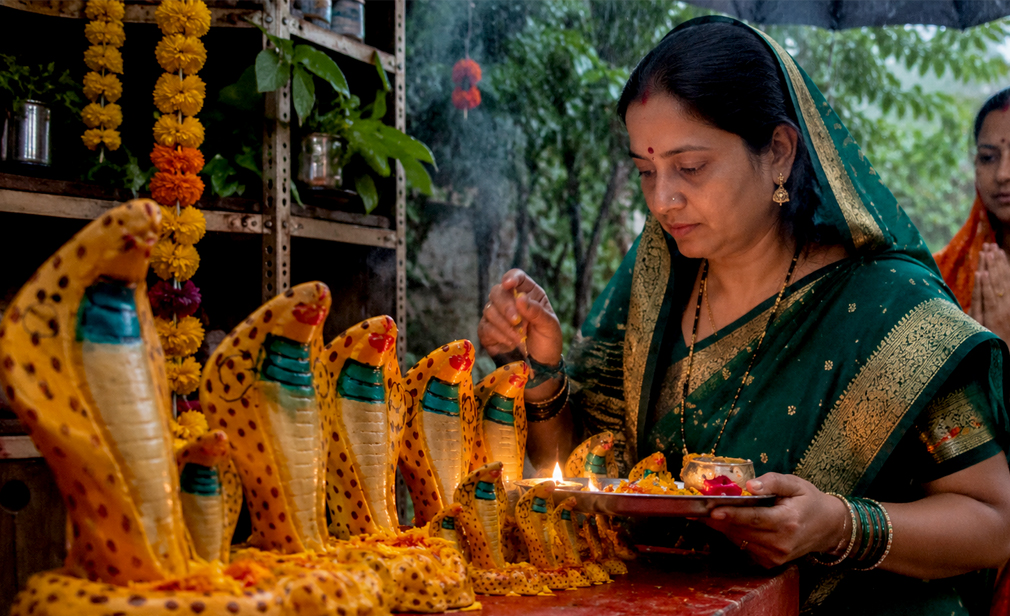
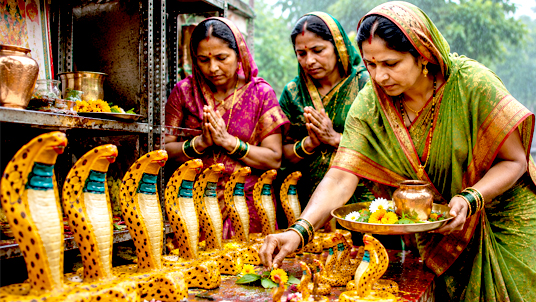
Worshipping Nag Devta

in.gov.incredibleindia.core.models.impl.ImageUtilModelImpl@300c5201

Offering Prayers

Right-Side-Image
Venue Address

Celebrated throughout Maharashtra

Date

17 August 2026 (Shukla Paksha 5, Shravan)

Source

Maharashtra Tourism

Explore more

festivals