

Welcome to the new Incredible India Digital Portal! While we are continuously updating and improving the site, we would love to hear your suggestions for features or content you'd like to see. Please share your feedback at info[dot]mot[at]gov[dot]in.

Hero-Banner

Navratri Utsav

Hero-Banner

Video Description

map


Major States

Maharashtra

Major States

Maharashtra

Navratri Utsav

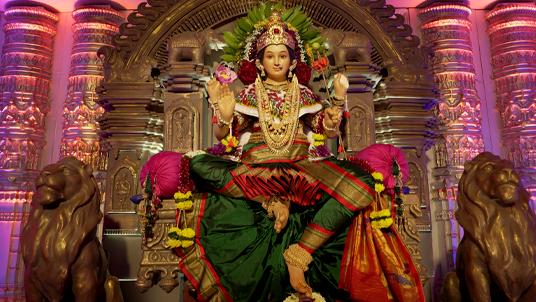
Navratri is one of the most significant Hindu festivals, celebrated all across the world. It is also one of the most ancient festivals, dating back to time immemorial.


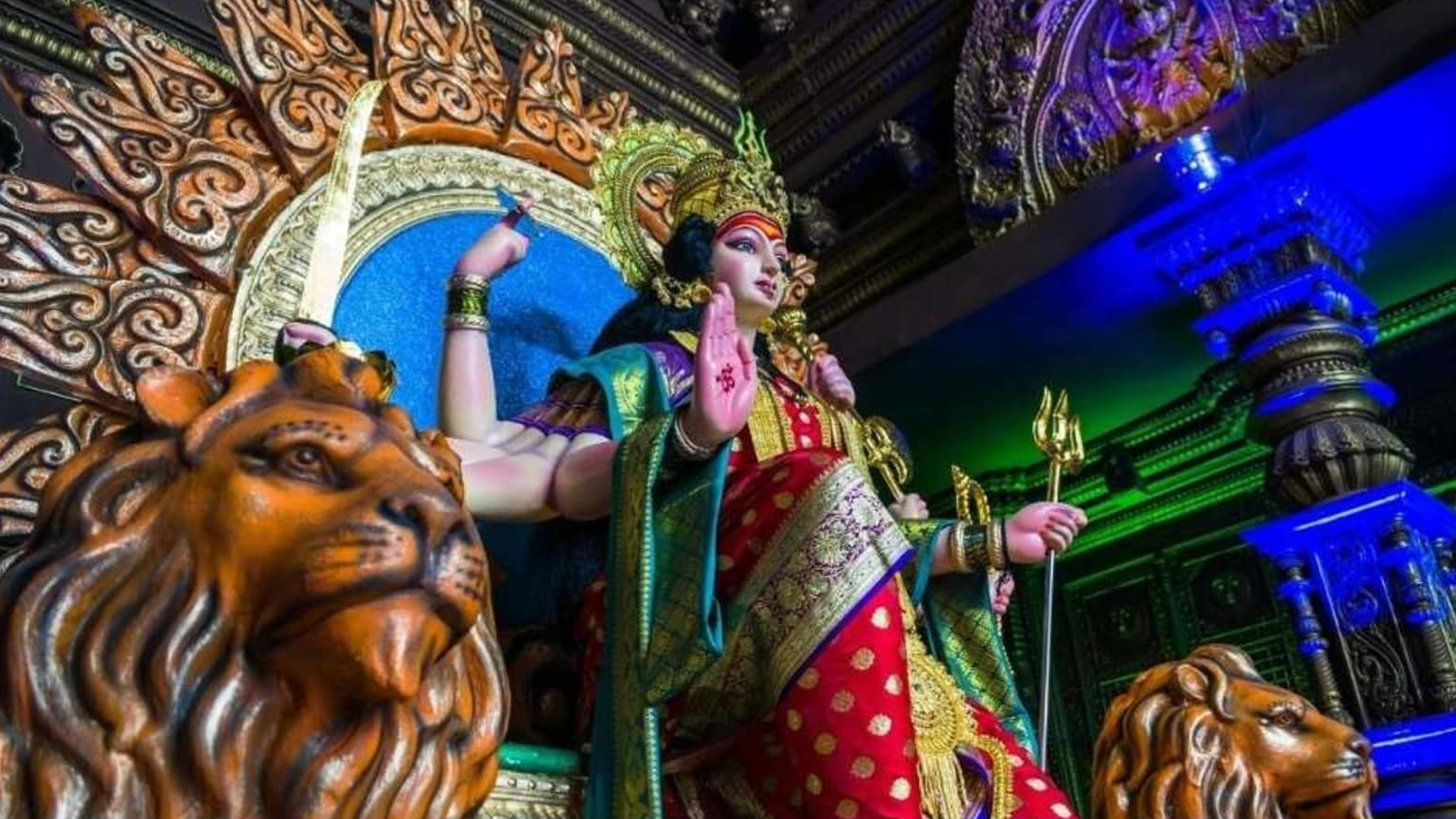
The legend associated with Navratri tells the story of the great battle between the powerful demon Mahishasura and Goddess Durga. Mahishasura was blessed with immortality by Lord Brahma, under the single condition that he could only be defeated by a woman. Armed with this boon and ultimate confidence, Mahishasura attacked the Triloka (the three realms: Earth, Heaven, and Hell). Because only a woman could defeat him, even the gods stood no chance against his might. Worried, the gods prayed to Lord Brahma, Lord Vishnu, and Lord Shiva to help them defeat their greatest enemy.


Ghatasthapana


Ghatasthapana, also known as Kalash Sthapana, is a significant ritual that marks the beginning of the auspicious Navratri festival. This sacred ceremony symbolizes the invocation of Goddess Durga, inviting her divine presence into the devotee’s home. The ritual involves several carefully orchestrated steps, each carrying profound spiritual meaning.


The process begins with the selection of a clean, sanctified space for the ritual. A layer of sacred soil is placed in a clay pot, representing the fertile ground of life. Barley seeds are then sown in this soil, which will sprout over the nine days of Navratri, symbolizing growth and prosperity. The centerpiece of the ritual is the establishment of the Kalash, a holy water vessel, atop the soil. This Kalash embodies the divine presence and serves as a focal point for worship throughout the festival.


The timing of Ghatasthapana is of utmost importance and is governed by specific astrological considerations. The most auspicious time to perform this ritual is within the first one-third of the day during Pratipada Tithi. Pratipada Tithi is the first day of the lunar fortnight in the Hindu calendar, marking the beginning of both the waxing (Shukla Paksha) and waning (Krishna Paksha) phases of the moon. This timing ensures the ritual’s efficacy and honors the tradition passed down through generations.


However, if circumstances prevent adherence to this timing, the Abhijeet Muhurta serves as an alternative. It is crucial to avoid certain inauspicious periods, such as Solah Ghati at night, in the afternoon, or after dawn. Additionally, the presence of Chitra Nakshatra or Vaidhriti Yoga during the Muhurta is considered unfavorable and should be avoided.


Ghatasthapana is an invocation of Goddess Shakti, and as per our scriptures, doing it at the wrong moment may incur Goddess Shakti’s wrath. Ghatasthapana is not permitted at night or on Amavasya.

Navratri

For Shardiya Navratri Puja Samagri, include essential items favoured by Goddess Durga to ensure a successful worship. Other important items for the puja are an earthen pot, barley, soil, an urn filled with water, cardamom, clove, camphor, moli (sacred thread), a whole betel nut, rice, coins to place in the urn or pot, five leaves of Ashoka or mango tree, a coconut, a red dupatta or chunni, flower garlands, makeup products, ittar (perfume), vermilion or sindoor, flowers, Durva grass, and fruits.

People who worship the goddess Durga during Navratri may do so in one of her many forms, such as Shailputri, Brahmacharini, Chandraghanta, Kushmanda, Skanda Mata, Katyayani, Kalratri, Maha Gauri, or Siddhidayini. In order to receive their heavenly benefits, they simultaneously worship the three principal manifestations of Goddess Shakti—Durga, Saraswati, and Lakshmi.

To commemorate this occasion in accordance with their customs, families and friends get together. People in Gujarat perform the Dandiya dance, keep fasts, and devote their time to prayer. India’s eastern regions observe Navratri as Durga Puja.

It is celebrated as Navratri in North India, with nine days of fervent Mother Goddess worship concluding with Dussehra. The burning of Ravana’s effigy during Dussehra symbolises the victory of good over evil.


The Nine Days of Navratri - Goddesses and Colours

Day 1: Maa Shailputri – Yellow (representing nature, joy and brightness, energy, and new beginnings).

Day 2: Maa Brahmacharini – Green (representing growth, nature, fertility, and devotion).

Day 3: Maa Chandraghanta – Grey (representing courage, balance and overcoming darkness with calm).

Day 4: Maa Kushmanda – Orange (representing warmth, enthusiasm, creativity, optimism, determination, and cosmic energy).

Day 5: Maa Skandamata – White (representing purity, peace, serenity and maternal love).

Day 6: Maa Katyayani – Red (representing fierce power, passion, love and action).

Day 7: Maa Kalaratri – Royal Blue (representing strength, courage, divine energy, and removing darkness).

Day 8: Maa Mahagauri – Pink or Peacock Green (representing optimism, grace, individuality and uniqueness and compassion).

Day 9: Maa Siddhidatri – Purple or Violet (representing ambition, achievement, and spirituality).
in.gov.incredibleindia.core.models.impl.ImageUtilModelImpl@5b4783a4

Essential Information

Right-Side-Image
Venue Address

Celebrated throughout Maharashtra

Date

11 October 2026 - 20 October 2026 (Shukla Paksha 1, Ashwin - Shukla Paksha 9, Ashwin)

Source

Maharashtra Tourism

Explore more

festivals