



How is the Bagad Constructed?
The preparation of the Bagad also follows a unique tradition. On the day of Dhulivandan (the day after Holi), the timber for the Bagad, which is kept submerged in the village's main large well throughout the year, is brought out. This wood is primarily acacia (babhul). Because acacia wood is exceptionally strong and resilient, it is used for building the structure of the Bagad. Artisans from the carpenter community inspect the timber and craft the necessary components. The actual construction of the Bagad begins about eight to ten days before the yatra.
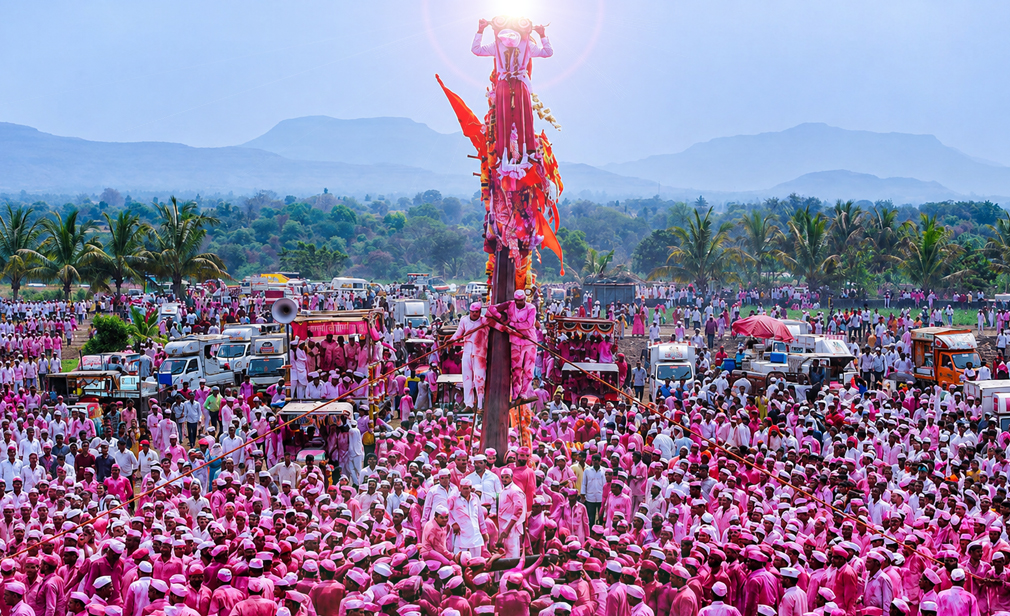
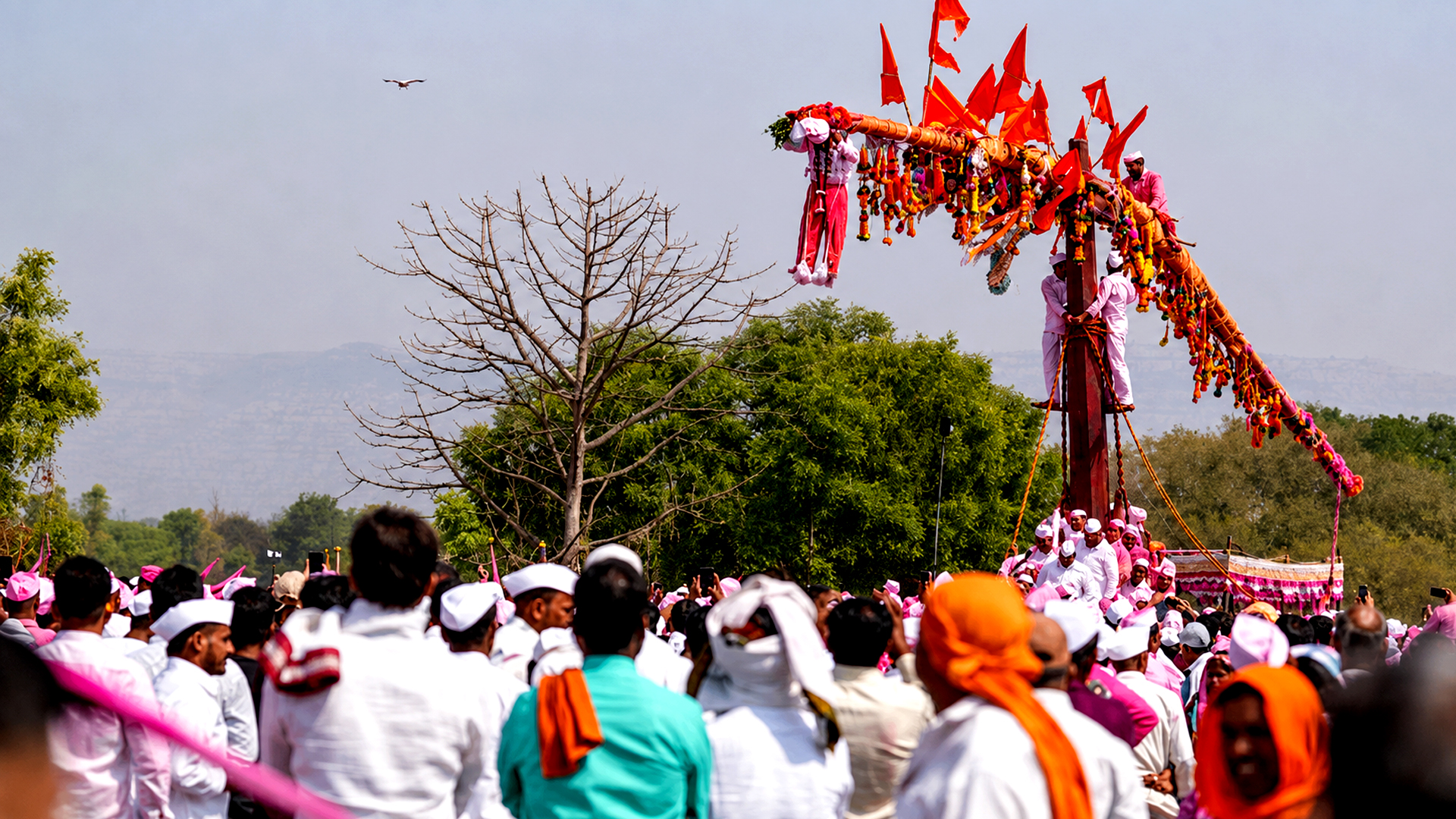
Bavdhan's Bagad is a marvel of traditional engineering. Weighing approximately two to three tons, this grand chariot is constructed entirely of wood, without using any iron nails or bolts. The Bagad features heavy stone wheels surmounted by a sturdy wooden frame. A key component of the structure is the Vaghala. The front portion of this timber is carved in the shape of a tiger's face. Since Lord Kalbhairavnath is considered a manifestation of Lord Shiva, it is believed that his seat is the Vyaghrasana (tiger throne). Therefore, this section of the Bagad is given the form of a tiger. Another distinct feature of this chariot is that its main beam (Aaldandi) is crafted from sandalwood.
Bagad and Khillar Bulls
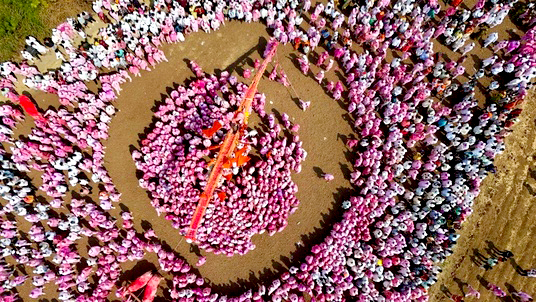
To pull a Bagad of such massive weight, it is customary to use twelve Khillar bulls—meaning six pairs. Only Khillar bulls are used for Bavdhan's Bagad. The front-most pair of bulls (Dhurvichi Bailjodi) plays a crucial role in giving the chariot its initial momentum. The sight of this magnificent chariot rolling through the fields, pulled by powerful bulls and followed by a surging crowd of devotees, is mesmerizing and thrilling.
How is the 'Bagadya'(Honoree) Selected?
On the day of Holi Pournima, after midnight, the temple priest traditionally performs the “Kaul” before the deity and decides the Bagad. At midnight, all the devotees of Bawdhan gather together at the Shree Kalbhairavnath Temple in Bawdhan. There is a divine silence in the atmosphere.
All those devotees who have made a vow to Nath sit in rows before the deity for the Kaul. The priest of the deity performs the Kaul before Nath in the name of each person who has made a vow. Each person’s name is called out, and for a moment, complete silence spreads throughout the entire premises.
The priest of the deity makes all the devotees who have made vows sit in a row. Five wheat grains each are placed for groups of 50 people. Wheat grains are placed on the right and left. The left Kaul means that the person is not chosen for the Bagad, while the right Kaul means that the person is the chosen Bagad participant.
As soon as the deity’s Kaul is received, the entire atmosphere echoes with the chant, “Kashinathache Changbhale!” The person who receives Nath’s right prasad is selected as the Bagadya for that year.
This honour is not merely a distinction; it is a testament to Nath’s blessings and the devotee’s faith.
Bagad Yatra and Various Traditions
The wedding ceremony of Shree Kalbhairavnath and Goddess Jogeshwari also holds special significance during the yatra. During the Haldi ceremony, married women (Suvasinis) of the village apply turmeric to the deity. Various traditional honour-holders (Manakaris) participate in this ceremony, upholding their respective customs. It is customary for the blacksmith community to hammer a ceremonial horseshoe (Naal) into the temple pillar. Through many such small rituals, the social and cultural structure of the village is clearly showcased.
The most unique and widely discussed feature of the Bagad Yatra is the practice of suspending a Bagadya (Honoree) devotee high on a central wooden pole using a hook attached to the chariot. A person accepts this honour to fulfill a vow. To prepare, the individual observes a strict fast for several days. On the day of the Bagad, tradition holds that he consumes only Neem Leaves and abstains even from water. This practice stems from the intense faith and unwavering belief of the devotees in the deity.
The route of the Bagad is also deeply intertwined with agricultural culture. A major portion of the procession passes directly through agricultural fields, while the remainder moves along the road. Farmers believe that the fields through which the Bagad passes yield a bumper crop. Thus, the Bagad is not just a celebration of the deity's chariot, but a folk belief tied to the land, agriculture, rainfall, and prosperity. The deep-rooted relationship between religion and agriculture in rural Maharashtra is strongly reflected through this tradition.
Bagad Yatra and Social Unity
Bavdhan's Bagad highlights another vital aspect: community unity. The entire management of this fair is carried out through the active participation of various social groups in the village. Every community is assigned a traditional responsibility, which is fulfilled with devotion and discipline. Carried forward for generations, this tradition has strengthened the social bonds within the village. It serves as an inspiring example of creating social unity through a religious festival.
In today's era of modern technology, while many traditional arts and customs are fading away, Bavdhan's Bagad preserves its ancient heritage. The grand chariot made of acacia (Babhul) wood, the stone wheels, the iron-free construction, the use of Khillar bulls, and the craftsmanship of the village carpenters stand as significant examples of Maharashtra's traditional knowledge and rural engineering.
Overall, Bavdhan's Bagad is an extraordinary confluence of faith, history, tradition, folk art, agricultural culture, traditional engineering, and social harmony. The people of Bavdhan deserve immense praise for preserving this tradition for over eight hundred years. As times change, it is essential to protect the cultural significance of this rich heritage while taking necessary safety precautions. Amidst the resounding chants of "Kashinathache Changbhale!”, the faith of lakhs of devotees converges today, keeping Bavdhan's Bagad alive as a grand and inspiring legacy of Maharashtra's folk culture.